
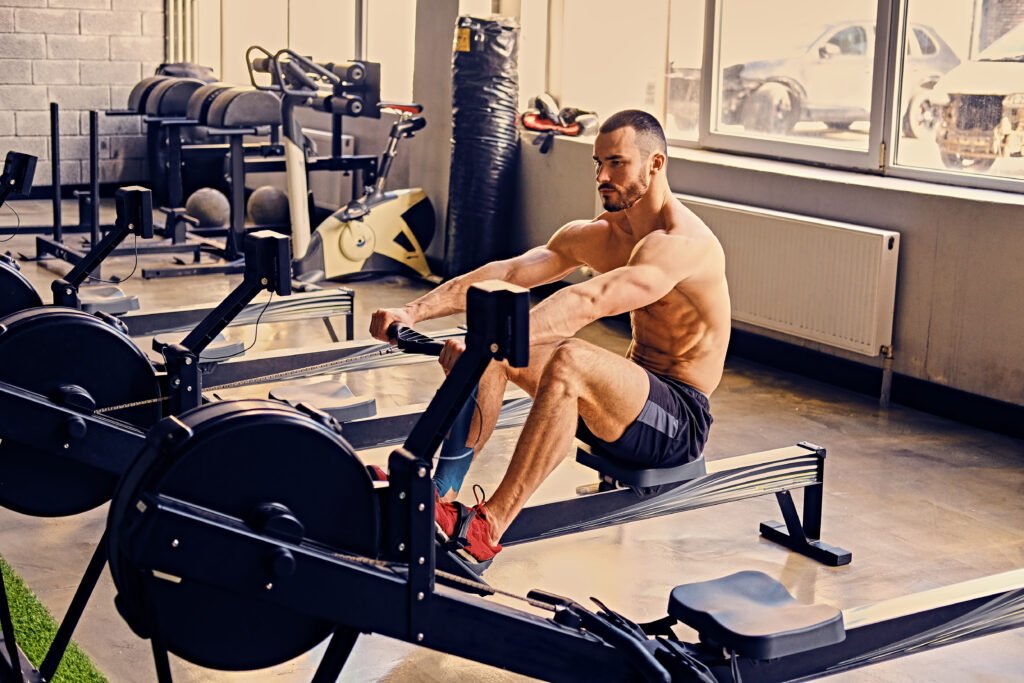
is rowing or cycling better for knees

Is Rowing or Cycling Better For Knees?

This post may contain affiliate links. As an Amazon Associate I earn from qualifying purchases, at no extra cost to you.

Introduction

Is Rowing or Cycling Better For Knees? Both cycling and rowing are excellent workouts with special advantages like low-impact cardio. Rowing is a full-body workout that works upper- and lower-body muscles and can be done indoors or on water, offering both aerobic and anaerobic benefits.

Cycling is a lower-body, aerobic activity that is low-impact on joints, making it perfect for outdoor endurance training and cardiovascular health.

While cycling and rowing are both great for improving heart health, strengthening muscles, and burning calories, rowing’s full-body engagement provides a more thorough muscle workout and can be more taxing in terms of power output.

Cycling vs rowing/Is Rowing or Cycling Better For Knees

In both indoor and outdoor environments, cycling and rowing are both efficient cardiovascular activities with different focuses that present special advantages and difficulties from a sporting, medical, and recreational standpoint. 

From a sports perspective, rowing offers a more thorough full-body workout that improves overall muscular endurance and power, which is essential for water-based rowing sports, while cycling emphasises lower body strength and endurance, which is especially advantageous for competitive racing and outdoor terrain navigation.

Rowing Machine Comparison

Brand

Model Name

Frame Material

Item Weight

Sunny Health & Fitness

SF-RW524079

Iron

41.4 pounds

MERACH

R02B8

Aluminum

45 pounds

MERACH

NovaRow R50 Pro

Alloy Steel

72 pounds

YOSUDA

Rowing Machine

Alloy Steel

43 pounds

YPOO

RM930

Alloy Steel

44.3 pounds

Wenoker

1

48.9 pounds

MERACH

MR-RS3

Alloy Steel

58 pounds

Dripex

Rowing Machines for Home

Aluminum

46 pounds

Concept2

RowErg

Aluminum, Stainless Steel

57.3 pounds

MERACH

Q1S

Alloy Steel

42 pounds

Common benefits of rowing and cycling/Is Rowing or Cycling Better For Knees?
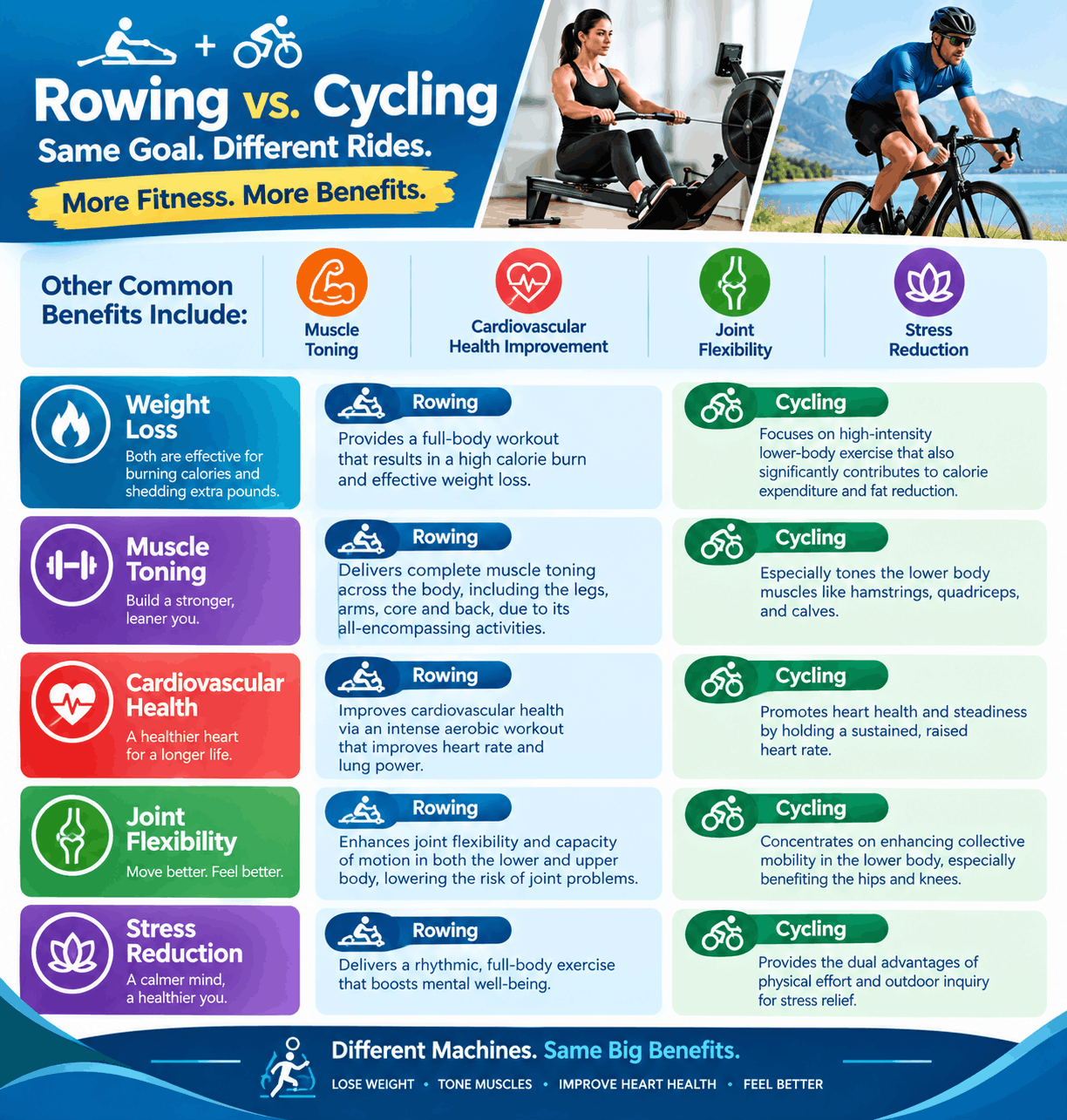
Is Rowing or Cycling Better For Knees? Other common benefits of rowing and cycling include muscle toning, cardiovascular health improvement, joint flexibility, and stress reduction.

Weight loss: Rowing provides a full-body workout that results in a high calorie burn and effective weight loss, while cycling focuses on high-intensity lower-body exercise that also significantly contributes to calorie expenditure and fat reduction. 

Muscle Toning: Rowing delivers complete muscle toning across the body, including the legs, arms, core, and back, due to its all-encompassing activities, whereas cycling especially tones the lower body muscles like hamstrings, quadriceps, and calves. 

Cardiovascular Health: Rowing improves cardiovascular health via an intense aerobic workout that improves heart rate and lung power, while cycling promotes heart health and steadiness by holding a sustained, raised heart rate. 

Joint Flexibility: Rowing enhances joint flexibility and capacity of motion in both the lower and upper body, lowering the risk of joint problems, while cycling concentrates on enhancing collective mobility in the lower body, especially benefiting the hips and knees. 

Stress Reduction: Both rowing and cycling are useful in reducing anxiety, with rowing delivering a rhythmic, full-body exercise that boosts mental well-being, and cycling delivering the dual advantages of physical effort and outdoor inquiry for stress relief.

Is Rowing or Cycling Better For Knees

How many calories does a rowing machine burn?

Depending on the person’s body weight and degree of exertion, a rowing machine burns calories at different rates. For instance, a 175 lb (79.38 kg) individual burns roughly 200.03 calories in 30 minutes on a stationary rowing machine at a moderate intensity.

Is rowing or cycling better for weight loss?

Because it engages more muscle groups, burns more calories (520.92 vs. 416.74 calories at 175 lbs for vigorous rowing and cycling, respectively), and has a higher afterburn effect due to excess post-exercise oxygen consumption (EPOC), rowing is generally better for weight loss than cycling, especially at vigorous intensities.

Nonetheless, riding at moderate to general intensities still helps create a calorie deficit and burns more calories (312.55 for available cycling vs. 145.86 for available rowing at 175 lbs).

Can rowing reduce belly fat?

Yes, rowing can decrease belly fat as it is a full-body cardiovascular workout that actually burns calories and hires the core muscles, helping in the reduction of general body fat, including visceral fat in the abdominal region, when mixed with a balanced diet and a regular exercise routine.

Does rowing build muscle?

Indeed, rowing strengthens the hamstrings, quadriceps, latissimus dorsi, gluteus maximus, trapezius, rhomboids, triceps, biceps, deltoids, and core muscles (including the obliques, rectus abdominis, and lower back). This is because rowing is a full-body exercise that engages a variety of muscle groups in the upper body, core, and lower body.

Is a rowing machine better than an exercise bike?

It depends on your plans. A rowing machine delivers a more extensive workout, engaging additional muscle groups and burning calories. An exercise bike is more peaceful, more comfortable on the joints, and better for multitasking. Each has powers depending on user choice and fitness objectives.

Which is better for bad knees?

For those with arthritis or knee pain, cycling is usually safer. It is not weight-bearing and uses gentle, circular motion to lubricate joints. Rowing can be good, too, but incorrect form may heighten existing knee issues.

How long should I row vs cycle?

Rowing for 20 to 30 minutes and cycling for 30 to 60 minutes are good goals for overall fitness. While cycling enables longer, more consistent sessions, rowing is more strenuous per minute.

Which improves cardiovascular fitness faster?

Cycling, especially at low to moderate level, develops robust aerobic capacity, while rowing, with its higher intensity and full-body demand, may provide quicker increases in cardiovascular fitness.

0 0 votes
Article Rating
Subscribe
Notify of
guest
0 Comments
Oldest
Newest Most Voted
Scroll to Top
0
Would love your thoughts, please comment.x
()
x