
Exercise Bike Reviews and Honest Home Cardio Guides
Exercise Bikes Reviews explains what spin, recumbent, upright and under-desk bikes really do for weight loss, muscle and sore joints, in plain English and with the drawbacks included. Every guide answers your question first, tells you who a machine is not for, and links to the research behind any health claim.
No prices that go stale overnight. No star ratings copied from shops. No test results we did not run.
Start here: what do you want from a bike?
Most people pick the wrong bike because they shop by features. Start with your goal instead, and the right type of bike usually becomes obvious.
Lose weight at home
How many calories a bike really burns, a realistic timeline, and why the belly is the last place to change.
Read the guide → MuscleBuild stronger legs
What cycling can and cannot do for leg muscle, and the resistance settings that make the difference.
Read the guide → Bad back or kneesGo easy on your joints
Why a recumbent bike suits back pain, sore knees and balance problems, and who should buy an upright instead.
Read the guide → Older ridersComfort and safety after 60
What actually matters for older riders: an easy step-through, a supportive seat and gentle resistance.
Read the guide → Desk workersMove while you sit
Whether under-desk pedallers and ellipticals do anything useful, and what to realistically expect from one.
Read the guide → Know your bodySee which muscles you use
The muscles a stationary bike works, from quads and glutes to the core, and how seat height changes it.
Read the guide →Our most useful guides
The questions readers ask us most, each answered in the first two sentences and then explained properly.
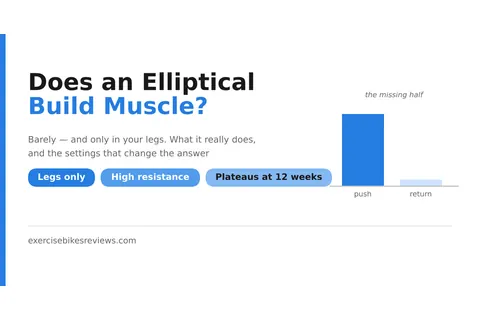
Does an Elliptical Build Muscle?
Barely, and only in your legs. What it really does, and the settings that change the answer.
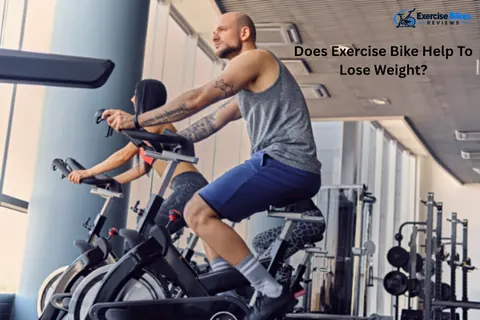
Does an Exercise Bike Help You Lose Weight?
Yes, with a calorie deficit. The real numbers and the mistakes that stall progress.
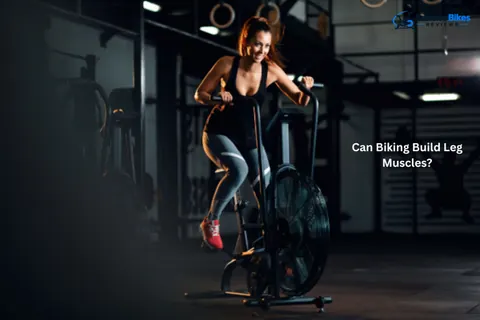
Can Cycling Build Leg Muscle?
Some, mostly early on and at high resistance. Who sees a change and who does not.
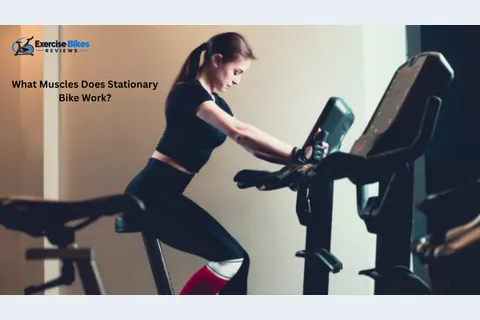
What Muscles Does a Stationary Bike Work?
A muscle-by-muscle breakdown, and why a recumbent and an upright feel so different.
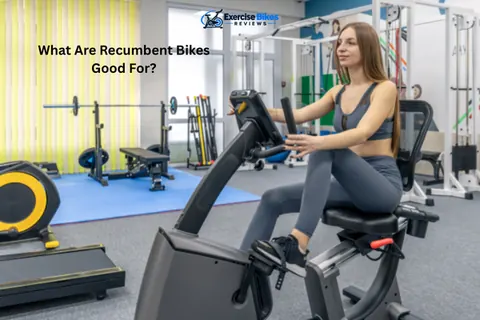
What Are Recumbent Bikes Good For?
Back support, low joint load and an easy step-through, plus the real drawbacks.

The Most Comfortable Exercise Bike for Seniors
What makes a bike comfortable and safe for older riders, and what to skip.

What Is a Spin Bike?
How a spin bike differs from every other exercise bike, and who it suits.
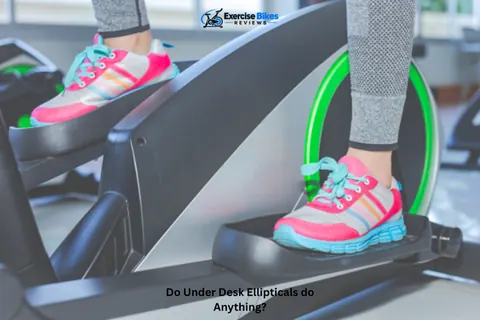
Do Under-Desk Ellipticals Work?
What a desk pedaller can do for you, and where the marketing overpromises.
Quick answers
The short version of the questions we get most. Each one links to the full guide.
Does an exercise bike help you lose weight?
Yes, as long as you are also eating in a calorie deficit. The bike adds to the calories you burn each day; it cannot outwork a diet that matches it. Read the weight loss guide.
Can cycling build leg muscle?
A little, mostly in the first few months if you are new to training and only at high resistance. For real muscle growth, pair the bike with two short strength sessions a week. Read the leg muscle guide.
Recumbent or upright for a bad back?
Usually a recumbent. The backrest supports your spine and the step-through frame is easy to get on. An upright gives a harder workout and takes less floor space. Read the recumbent guide.
Does an elliptical build muscle?
Barely, and only in your legs. It is an excellent low-impact cardio machine, but it stops adding muscle after the first two or three months. Read the elliptical guide.
How to choose an exercise bike
Five things decide whether a bike suits you. The screen and the app matter far less than most adverts suggest.
- Pick the type that fits your body. Recumbent for back pain, sore knees or balance; upright or spin for a harder workout in less space; an under-desk pedaller only for moving while you sit.
- Check the resistance system. Magnetic resistance is quiet and needs almost no maintenance. Friction pads are cheaper but wear and are noisier. Air resistance gets harder the faster you pedal, and it is loud.
- Make sure it fits you. Look for the rider height range on the spec sheet, and check that the seat and handlebars adjust far enough for your leg length.
- Look at weight capacity and stability. Leave a margin above your own weight. A heavier frame and flywheel usually means a steadier, smoother ride.
- Measure your space, and think about noise. Check the footprint, whether it has wheels to move it, and how quiet it needs to be for a flat or early mornings. If you can wait, it also pays to know when exercise equipment is cheapest.
How we put our guides together
What we do
We read the manufacturer’s specifications, check them against published research, and cite the studies behind any health or fitness claim.
What we don’t do
We do not run a test lab. Unless a guide says a product was used by us, assume it was not. We never invent test results.
How we earn
As an Amazon Associate we earn from qualifying purchases, at no extra cost to you. It does not decide what we recommend. Affiliate disclosure.
Who writes these guides

Amad
Amad has been training for seven years, at home and in the gym, with exercise bikes and ellipticals as a regular part of his routine. He runs Exercise Bikes Reviews to give straight, practical answers about home cardio equipment: what it does well, where it falls short, and who it is not right for. Amad is not a certified personal trainer or a medical professional, so the training and health guidance on this site is checked against published research, which is cited in each guide.
All our guides
Weight loss and muscle
Choosing a bike
Joints and comparisons
Machine weights and reviews
Exercise Bikes Reviews gives general fitness information, not medical advice. If you have a heart condition, joint problem or injury, check with your doctor or physiotherapist before starting a new exercise routine.